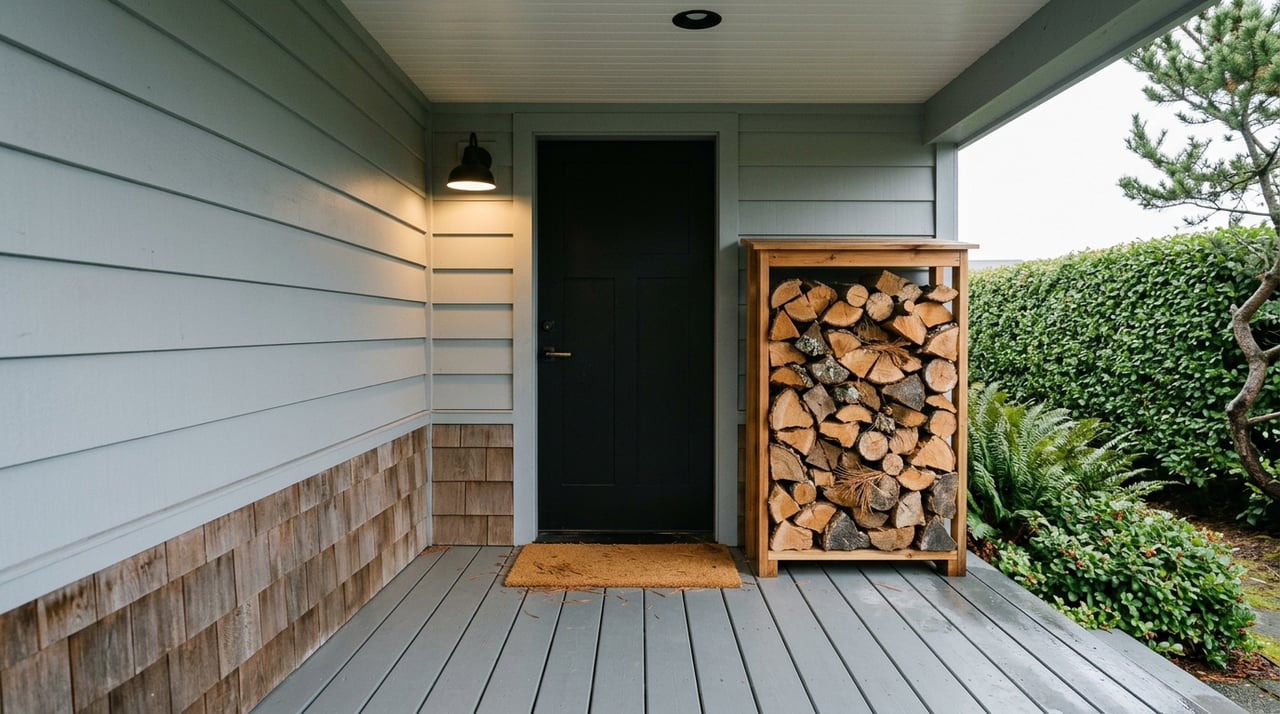
Nehalem's Fall Isn't A Slow Season. It's The One That Belongs To Locals.
August 6, 2026
August 6, 2026
The first weekend of August is when the parking lot at Kelly's Brighton Marina starts to thin out and the boats on the bay start to focus. Not on rockfish, not on crab pots, but on kings. If you live in the Nehalem Valley, you already know the tell: the trucks with the extended rod holders start showing up before sunrise, and the conversation at the counter shifts from tide charts to bag limits.
That shift is the thesis of this post. Fall in Nehalem is not the polite, quieter cousin of summer. It is the season the town was built around, and the calendar that follows the salmon is the calendar that runs everything else. Once you see the sequence, the rest of autumn here reads differently.
Nehalem is the only Oregon coast river besides the Columbia with a recognized run of summer Chinook, and those fish start pushing into the bay in July, weeks before Tillamook or Nestucca see comparable action. The Nehalem River is the only river on the Oregon coast besides the Columbia to get a recognized run of summer chinook, and these fish start entering the bay in July, long before other bays up and down the coast are even thinking about chinook.
This year the regulations changed in a way that matters if you fish here. The Necanicum, Nehalem, and Tillamook basins will all carry a bag limit of 1 wild Chinook per day and 5 per season, a significant increase from last year's 1 per day and 2 per season. Going from two fish for the whole year to five is not a rounding error. It changes the math on whether you bother running the boat out on a marginal tide in October.
The coho window is the piece to circle on the calendar. The Nehalem, Tillamook, and Nestucca fisheries will again run on a Wednesday, Saturday, and Sunday schedule from September 9 through October 28, with one extra open day compared to last year. Three days a week, seven weeks, with an early July report already noting that Nehalem Bay has "summer" Chinook coming in, these fish are early returning fall Chinook that start returning to the bay and river in late July and August, and there has been an uptick in angler harvest over the past week with fish being caught daily.
There is a knock-on effect worth naming. Because the entrance of Nehalem Bay is so small, the vacuum effect of an incoming tide is magnified, dragging in a lot of bait and salmon with it, and a biologist once told me that 70% of the fish caught on an incoming tide in between the Nehalem jetties are fish destined for another system. Translation: on the right tide, you are fishing water that carries salmon headed for the Columbia and Tillamook, not just your own river. That is why the boat count on the bay in September rivals a summer holiday.
If the bay is the town's engine in September, the Grange is its social hub in October. The Heritage Apple Festival is not a generic craft fair. It is the public face of a multi-year project to identify and preserve the apple varieties that came into the valley with the earliest homesteads.
Apple trees came to the Nehalem Valley with the homesteaders who began arriving in the early 1860s, displacing the Nehalem band of the Tillamook people. Some of those trees are still fruiting. In the Nehalem Valley, 100-year-old apple trees are still producing fruit, proof of early European homesteads, and locals now refer to them as "heritage apple trees" — they are at the center of the White Clover Grange's Heritage Apple Festival.
The person doing the cider work is worth knowing by name. David Hendrickson assisted the grange in identifying heritage trees in the Nehalem Valley area and continues to be the main apple cider maker at the event, and his Wheeler-based business, Carola Wine + Cider, is unique in that the hard ciders he produces are made from "found" and often heritage apples. One of his named varieties, "Stoppi-yellow," comes from two of the oldest trees on the Stoppiello family property in Nehalem.
Practical detail if you plan to walk in: the event runs from 11 am to 3 pm at the White Clover Grange, located at 36585 Hwy 53 in Nehalem, and more information is at whiteclovergrange.org. Bring a jar. Old-fashioned presses will pump out fresh cider made from local apples, and guests are invited to bring jars for juice and, if they have them, apples from their own trees.
Once the visitor bookings drop off in mid-September, the North County Recreation District takes over as the community's living room. The building itself is the story: the NCRD Performing Arts Center at 36155 9th St. in Nehalem is the heart of a small rural community on the Oregon coast, originally built as an elementary school in the 1920s and purchased by the District in the early 2000s.
Two things about it that most quick-hit lifestyle posts miss. First, the room is small enough to matter. The theatre contains 193 comfortable seats, and it is equipped with a full complement of stage lights and sound equipment as well as a 12 ft. movie screen with projector. Second, access is genuinely broad. Riverbend Players is the first arts organization in Tillamook County to join the Regional Arts and Culture Council's Arts for All program, a groundbreaking initiative to expand access to arts and cultural experiences for all Oregonians regardless of income or background, offering $5 tickets for SNAP benefit recipients and all students under 26 years old with a student ID.
That is a real answer to the "what do you actually do here in the winter" question that gets asked at every dinner party.
| Window | What's happening | Where |
|---|---|---|
| Late July through August | Early Chinook in the bay, one wild per day | Nehalem Bay jetties, tidewater |
| Sept 9 through Oct 28 | Coho open Wed/Sat/Sun | Bay and lower river |
| Early October | Heritage Apple Festival, cider pressing | White Clover Grange, Hwy 53 |
| September through November | Fall Chinook peak, then coho push on the first rains | Roy Creek Boat Ramp up to tidewater |
| October into spring | Riverbend Players season, touring music | NCRD Performing Arts Center |
The dining conversation in Nehalem gets simpler in October because the seasonal churn stops. What is left is what locals have been eating all along.
Wanda's Cafe + Bakery is the morning anchor for a reason, and the ancient-grain bread earns the fuss it gets. Bayway Tavern reopens the deck conversation once the wind eases. Regulars point to the burgers, the chef salad, and the bayway dip and club sandwich, and describe it as a local bar serving great food.
Wild Coast Goods sits in the same block of Manzanita-adjacent life that makes Nehalem feel less isolated than the map suggests. Wild Coast Goods is a small shop owned by Ashley Mersereau and Justin Bailie, both working artists who were born and raised on the north Oregon coast, and the shop carries locally made goods and handmade items. It is where you send an out-of-town friend who wants to bring something home that is not a taffy box.
For a slower afternoon, the Nehalem Bay Winery sits a mile off Highway 101 on Highway 53, in a green valley looking out across a dairy. It is a low-key alternative to a Willamette Valley wine-tasting day and pairs naturally with a Grange visit if the calendar lines up.
The reason to write any of this down is simple. Nehalem does not perform for weekend traffic. It runs on a calendar the fish set, the Grange follows, and the NCRD stage carries through the dark months. Once you can read that calendar, you stop thinking of October and November as the off-season and start thinking of them as the part of the year that is actually yours.
If you have questions about the valley beyond what's on the calendar, or you just want a knowledgeable neighbor to talk through what it looks like to spend more of the year here, Megan Despain is around. Let's connect.
Get assistance in determining current property value, crafting a competitive offer, writing and negotiating a contract, and much more. Contact me today.